Predictive AI Reduces Manufacturing Downtime by 81%
A mid-sized manufacturing plant implemented AI-powered predictive maintenance and quality control systems that prevent failures before they happen, saving millions in downtime costs.
INDUSTRY
Manufacturing
COMPANY SIZE
500-1000 employees
TIMELINE
12 weeks implementation
The Challenge
This automotive parts manufacturer was losing millions to unexpected equipment failures. Their production lines would suddenly stop, sometimes for days, while technicians scrambled to diagnose and fix issues. By the time they identified the problem, the damage was done—missed deadlines, unhappy customers, and massive repair bills.
Their maintenance strategy was purely reactive. Wait for something to break, then fix it. They tried scheduled maintenance, but that meant taking working equipment offline "just in case," which felt wasteful. Quality control was another headache—defects were only caught after production, leading to expensive rework and scrap.
Key Pain Points
- • 120+ hours of unplanned downtime monthly
- • $3.8M annual cost from equipment failures
- • 6.2% defect rate in production
- • No early warning system for failures
- • Reactive maintenance costing 3x more than preventive

Our Solution
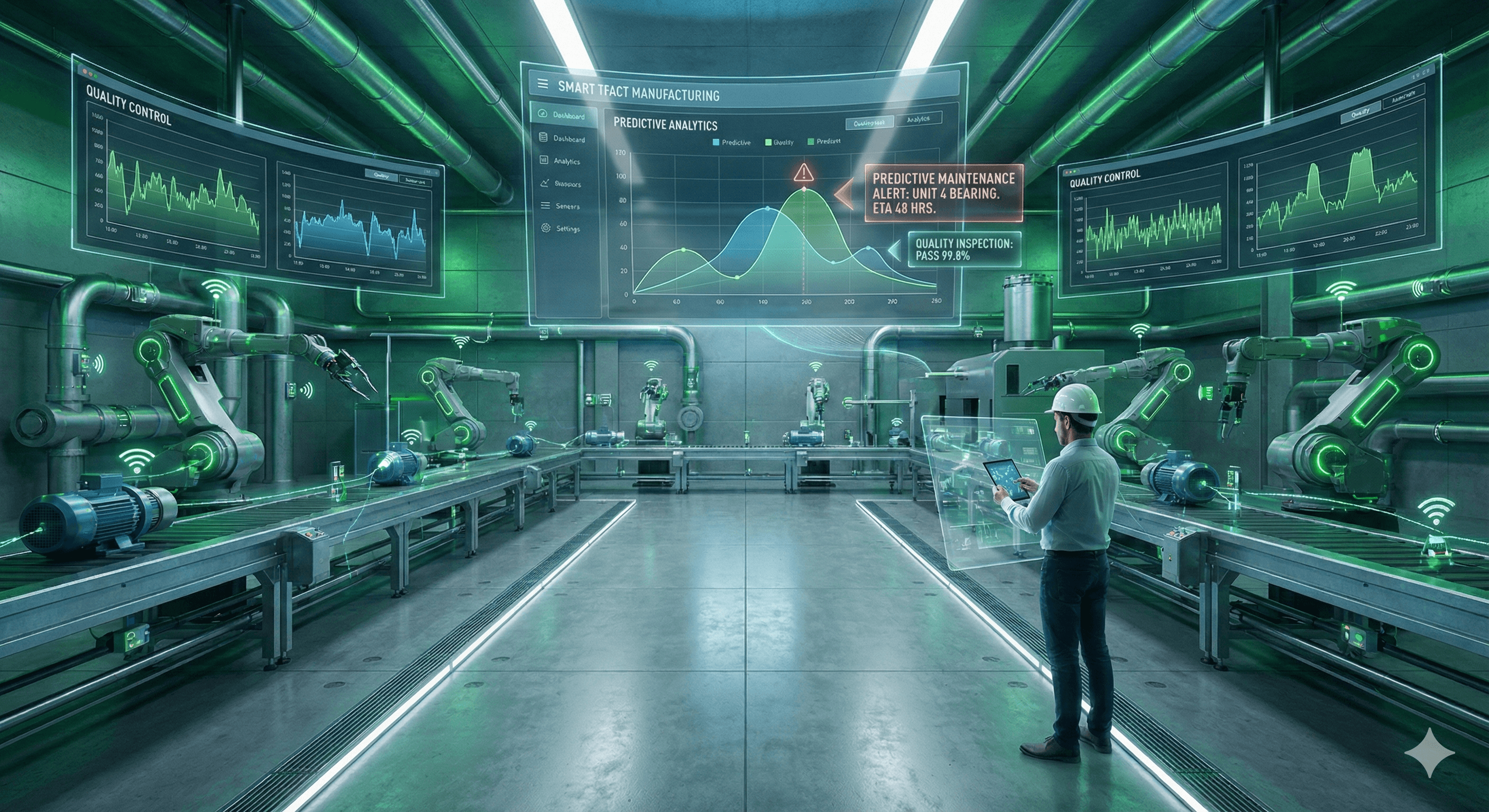
We deployed an AI system that monitors every piece of equipment in real-time, learning normal operating patterns and detecting the subtle signs that something's about to fail. Think of it as giving the factory a nervous system—it can feel when something's wrong before it becomes a problem.
Predictive Maintenance
AI analyzes vibration, temperature, pressure, and acoustic data from sensors to predict failures 2-4 weeks in advance. Maintenance teams get alerts with specific recommendations on what to fix and when.
Real-Time Quality Control
Computer vision systems inspect every part as it's produced, catching defects instantly. The AI learned what "good" looks like and flags anything that deviates, even subtle issues human inspectors might miss.
Production Optimization
The system analyzes production data to identify bottlenecks and inefficiencies. It suggests optimal machine settings, production schedules, and workflow adjustments to maximize throughput.
Automated Diagnostics
When issues occur, AI agents diagnose the root cause and provide step-by-step repair guidance. Technicians spend less time troubleshooting and more time fixing, reducing mean time to repair by 60%.
Technology Stack
AI & ML
TensorFlow for predictive models, computer vision for quality inspection, time-series analysis for sensor data
IoT Infrastructure
Industrial sensors, edge computing devices, real-time data streaming pipeline
Integration
Connected to ERP, MES, and CMMS systems for seamless data flow
The Results
What Changed?
❌ Before
- • Unexpected breakdowns halting production
- • Days of downtime for major failures
- • Defects discovered after production
- • Expensive emergency repairs
- • No visibility into equipment health
✅ After
- • Planned maintenance during scheduled downtime
- • Issues fixed before they cause failures
- • Real-time defect detection and correction
- • Proactive, cost-effective maintenance
- • Complete equipment health monitoring
"The first time the system predicted a bearing failure three weeks before it would have happened, I was skeptical. But we replaced it during scheduled maintenance, and when we examined the old bearing, it was definitely on its way out. That one prediction alone saved us a week of downtime and probably $200K. Now we trust it completely."
Key Takeaways
Data is Gold
The more sensor data you collect, the better the predictions. We started with basic monitoring and gradually added more sensors as we saw the value.
Train Your Team
Technicians needed to learn to trust the AI's predictions. We ran a pilot program and let the data prove itself before full rollout.
Start Small, Scale Fast
We began with one production line, proved the ROI, then expanded plant-wide. Quick wins built momentum and secured buy-in for larger investment.
Ready to Eliminate Unexpected Downtime?
Let's discuss how predictive AI can transform your manufacturing operations. We'll analyze your equipment and show you what's possible.